
Mandaeans – Exploring the Ancient Gnostic Faith
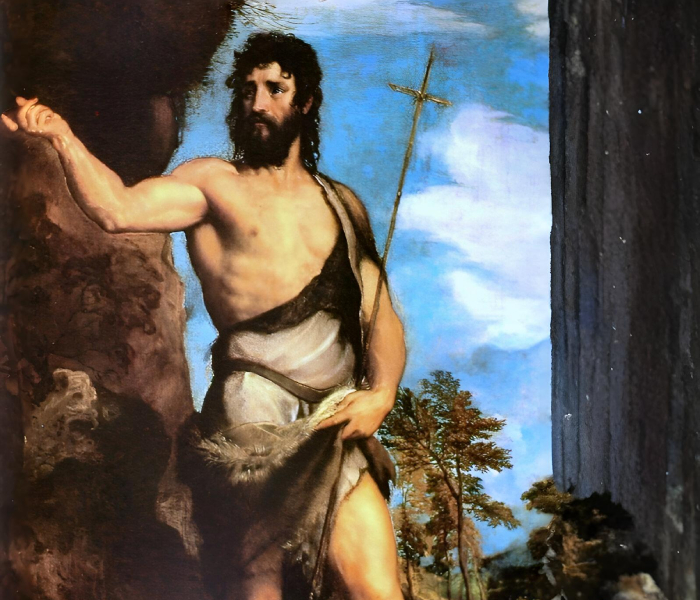
Mandaeans are also known as Mandaean Sabians or simply as Sabians. They are an ethnoreligious group and are followers of Mandaeism. Their prophet is John the Baptist. Certain studies suggest that they may have been one of the earliest religious groups to practise baptism, and followers of Gnosticism. The Mandaeans originally spoke Mandaic, an Eastern Aramaic language. However, they later switched to Mesopotamian Arabic or Persian as their main language.
The name “Mandaean” comes from the Mandaic word manda, which means “to have knowledge”. They are also called Mandaeans in several Muslim countries.
Mandaeism – Beliefs and Practices
The core doctrine of Mandaeism is known as Nāṣerutā which means Nasoraean gnosis or divine wisdom. These Nasoraeans consist of tarmidutā (priesthood) and mandāyutā (laity), the latter derived from their term for knowledge manda. Knowledge (manda) is also the source for the term Mandaeism which encompasses their culture, rituals, beliefs associated with the doctrine of Nāṣerutā. Followers of Mandaeism are called Mandaeans, and sometimes Nasoraeans , Gnostics or Sabians as well.Source: https://en.wikipedia.org/wiki/Mandaeism
Mandaean Rituals and Doctrines
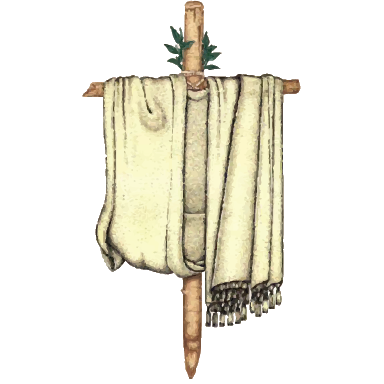
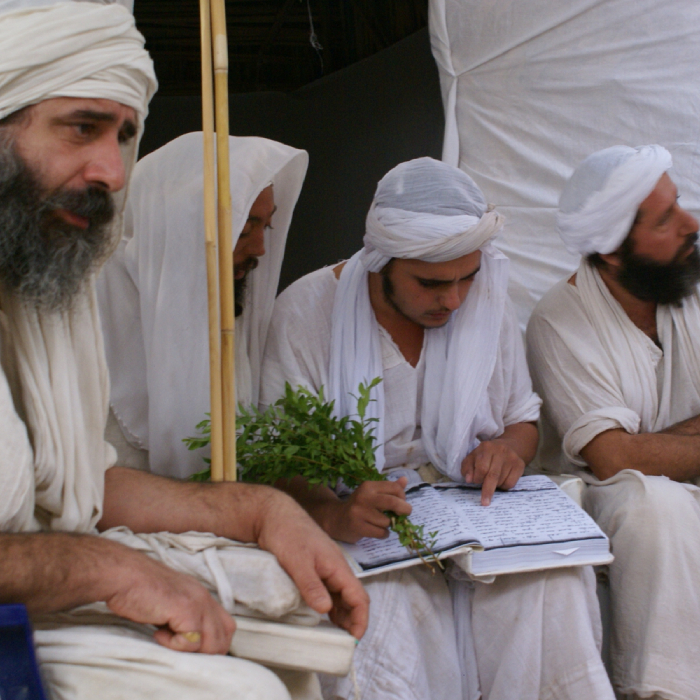
Mandaean rituals resemble the Israelite temple cult. The latter occupied the central place to the temple cult, whereas in the former, that role is filled by the mandi, or ritual hut. In early texts, these mandi were called “temples” or “tabernacles.”
The design of the hut is similar to that of the, though on a smaller scale, with a boundary wall that divides the sacred space of the temple, a courtyard, through which flows a small man-made inlet from the river. Here, ordinances are performed. Within the hut complex, they make use of incense altars and offer sacrifices of doves, fowl and sheep. The sacrifices are ritually slain and baked for consumption. They practice these and most other ordinances within their small temple complexes.
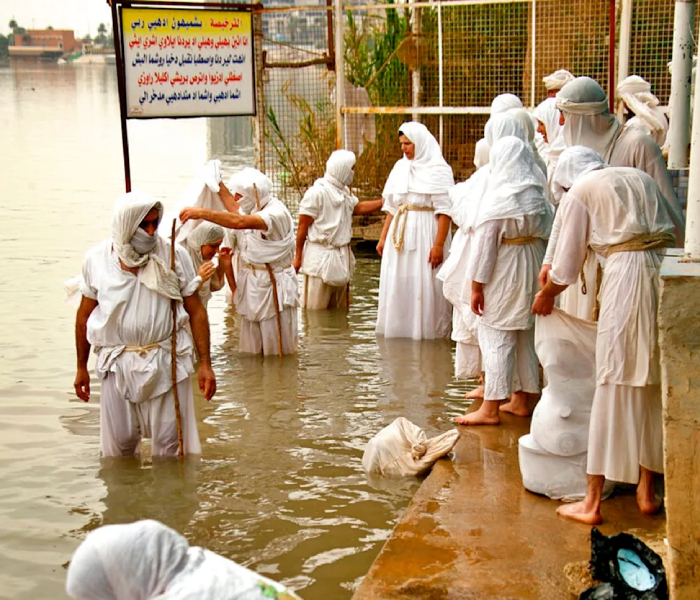
As part of the Mandaean ritual, the mandi is the flowing water (yardne) in which rituals are performed. The purpose of the baptism ritual of the Mandaeans is to, “make contact with the worlds of light and their healing powers.”
Source: https://scholarsarchive.byu.edu/cgi/viewcontent.cgi?article=1068&context=studiaantiqua

Mandaean Writings
Some of the most important Mandaean writings are the Ginza (Book of Adam), a cosmological treatise, the Book of John, which describes the activities of John the Baptist, the Book of the Zodiac, which is a collection of magical and astrological texts, and the Baptism of Hibil Ziwa, which describes the purification of the heavenly saviour of the Mandaeans.
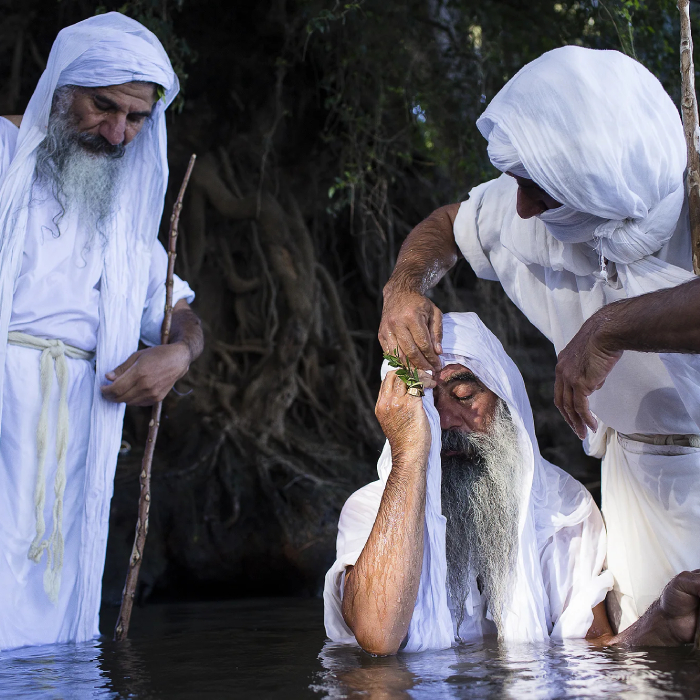
Mandaean Religious Concept
According to Mandaean beliefs, the material world is a combination of light and dark, created by Ptahil, who fills the role of the demiurge, with help from dark powers, such as Ruha, the Seven, and the Twelve. Adam’s body was considered as a part by these dark beings, however his soul (or mind) is considered to be a part of Light. So, many Mandaeans believe the human soul can achieve salvation because it originates from the lightworld. The soul, sometimes is referred to as the ‘inner Adam’ or Adam Kasia. The belief is that it needs to be rescued from the dark, so it may ascend into the heavenly realm of the lightworld.
Baptisms are a central theme in Mandaeism since they believe it to be necessary for the redemption of the soul. They do not perform a single baptism; rather, they view baptisms as a ritual that brings the soul closer to salvation. That’s why Mandaeans are baptized repeatedly during their lives. John the Baptizer is a key figure for the Mandaeans, they consider him to have been a Nasoraean Mandaean and is considered their greatest and final teacher.
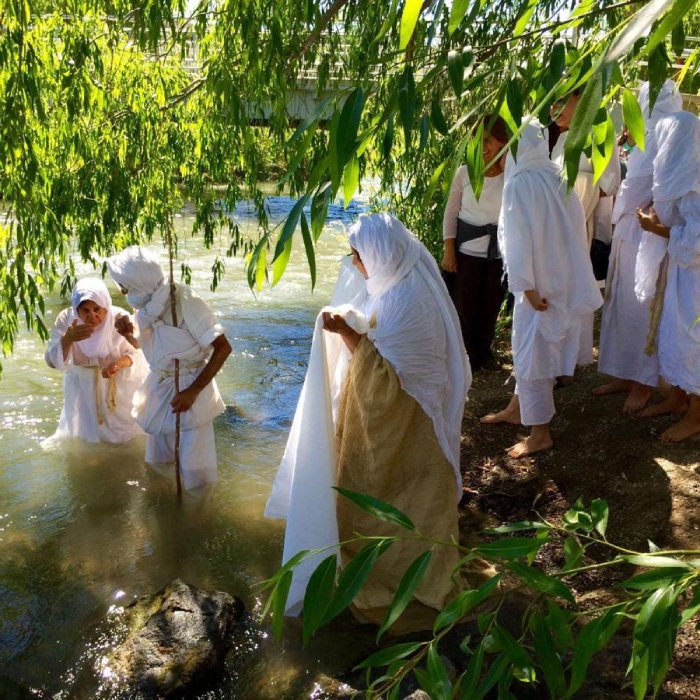
Mandaean Seasons and Holy Days
The Mandaean year is divided into twelve months of thirty days each, with five intercalary days named Parwanaia (pronounced sometimes Paranoia), or Panja. This falls between the 30th day of Shumbulta and the 1st day of Qaina. These twelve months are further divided into four seasonal divisions: Sitwa (winter), Abhar (spring), Gita (Geyta) (summer), and Paiz (autumn). These do not follow the actual seasonal changes of hot and cold weather.
Each season is subdivided into three – First, Middle, and Last (Awwal, Misai, and Akhir or Khir). The twelve months are given other names also: Nisan, Ayar, Siwan.
Each year is named after the day with which it began, e.g. the year of Habshaba, the Year of Sunday; or Year of Rahatia, Year of Friday.
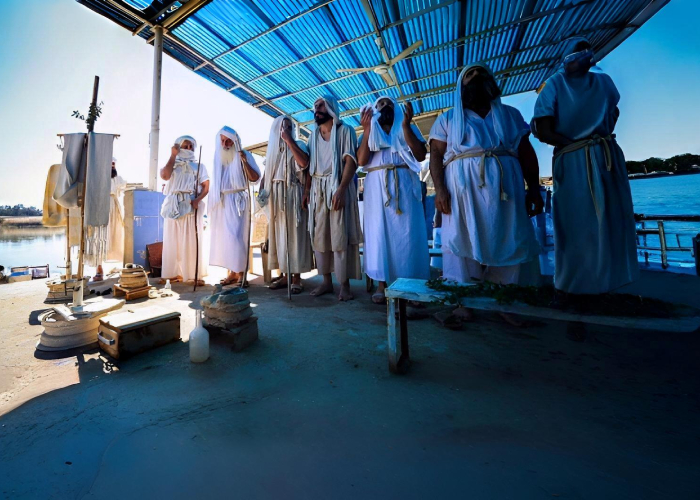
The Thriving Mandaean Community
Mandaeans lived mostly in towns and cities of southern Iraq, their important religious and cultural customs centering on the Tigris and Euphrates rivers. Today, hundreds and thousands of people of this faith thrive across the world. They are practicing their rituals, i.e. baptism several times in a year. Besides, the festivals also attract crowds from other religions and communities.
Source: https://www.theguardian.com/us-news/article/2024/jun/09/iraq-mandaean-religion-michigan
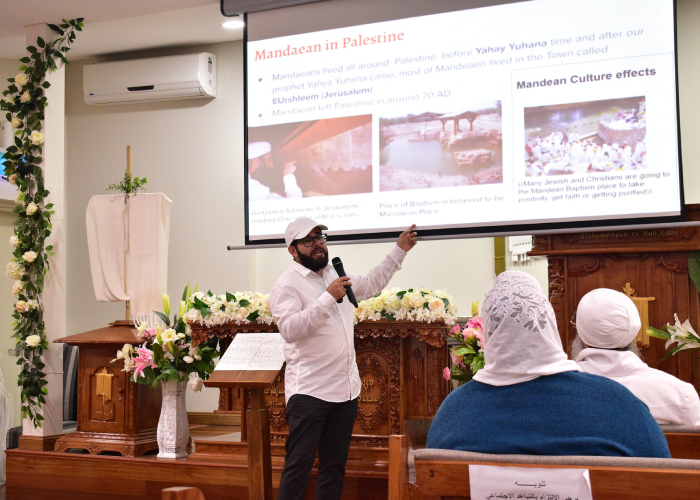
Mandaean Networking
Today, like other religions, the Mandaean community is well connected through social media groups and other applications. They discuss their culture, rituals and practices online. However, various seminars and workshops are also arranged where the believers can together, meet people from their community and develop connections.
Source: https://www.reddit.com/r/religion/comments/v596x7/would_anyone_like_to_know_about_mandaeanism_my/
Explore the Mandaean Spiritual Heritage
Get the App Now